
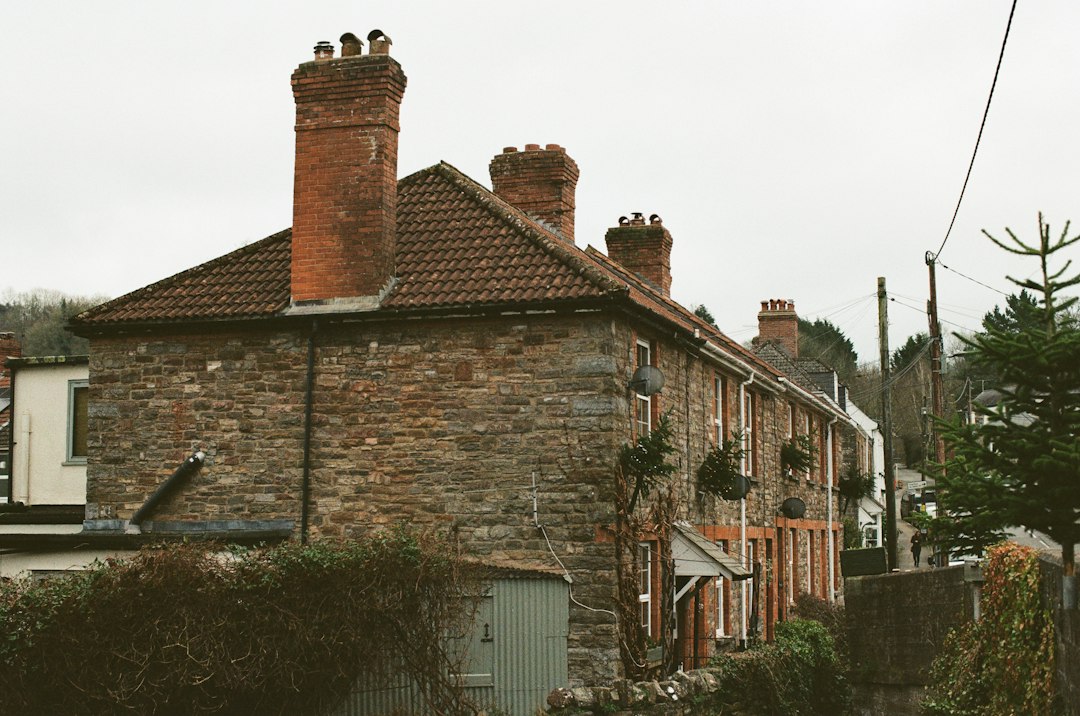
An old chimney has four parts that wear out. A sale is the moment to look at all of them.
Book a sale inspection
Give us the address, say if you are the buyer or the seller, and name who should receive the findings.
The four old parts we read first
Most houses in Paramount, Bell and South Gate that went up before 1980 carry a masonry chimney built the way masons built them then. Inside the brick runs a stack of clay tiles that carries the smoke. Near the bottom sits a cast iron damper on a hinge. The brick is held together with mortar softer than anything laid in a wall today, and the top is finished with a slab of cement mixed on the roof. Each of these parts ages at its own pace, and each fails in a way nobody sees from the living room.
- Clay flue tile: cracks from heat, old chimney fires and ground movement; open joints let smoke reach wood
- Cast iron damper: rust, a bowed plate or a seized handle leave the flue stuck open or stuck shut
- Old soft mortar: washes out of the joints over the decades until bricks above the roof sit loose
- Cement crown: once it splits, winter rain soaks into the brick under it and rusts what sits below
What the Level 2 does with each part
The camera goes down from the roof and shows every tile and every seam between them, so a crack sitting halfway down gets found instead of guessed at. At the bottom we open and close the damper, look for rust flakes on the smoke shelf and see whether the frame has pulled away from the brick. Outside we scrape a few joints, look over the crown and check the metal where the chimney meets the roof. In the attic we look for damp wood or stains next to the brick.
Each finding is written as symptom, likely cause and repair, with a photo taken at the spot. Where the repair is one we sell at a set price, such as a cricket, the figure goes next to it. A cap is quoted after we measure. Where it is not, such as relining or a crown, the report says so and offers a written figure after a closer look.
Why the age of the house changes the answer
A clay tile flue from the 1950s may have seen decades of wood fires, a few strong quakes and years without a cap. None of that shows from the hearth. NFPA 211, the fire code document written for chimneys, asks for the camera level whenever a house is sold, because a new owner inherits a flue they have never watched in use.
For a seller, finding the damage first means it can be repaired, priced into the listing or written into the disclosures. For a buyer, it means a request for repairs or a credit rests on photos rather than on a hunch.
Inspection prices for an older house
The camera inspection is the one a sale calls for. The visual check is there if you only want a first look.
- Level 2, whole flue on camera plus roof and attic
- $405
- Level 1, the parts within easy reach
- $57
Repairs found on the day appear in the report with our set price where the job has one, and a written figure after a closer look where it does not.
Questions on older house sales
The house was built in the 1940s. Is the chimney bound to fail?
Age alone does not fail a chimney. On houses that old around Paramount we most often find cracked tile near the top, where heat and weather hit hardest, and mortar washed out of the brick above the roof. Both can be repaired, and the camera shows which one you have and where.
The home inspector wrote that a chimney specialist should look. Is this that visit?
Yes. A general inspection covers the whole house and stops at the parts of the chimney in plain view. The Level 2 is the closer look that note is asking for.
Who pays for it, the buyer or the seller?
Either one. Whoever orders it pays for it and decides who else gets a copy of the findings and photos.
Does cracked tile mean the chimney has to come down?
Rarely. A flue with broken tile is usually fitted with a stainless steel liner from the top, which leaves the brick standing. Rebuilding comes up when the brick itself is loose or leaning.
Does anyone need to meet you at the house?
Someone has to open up and let us reach the fireplace, the roof and the attic hatch. On a listed house the agents usually arrange that between them.
Selling or buying an older house in Paramount?
Book the Level 2 through the contact page. Give us the street and the names of everyone who should see the findings, and we will set a time.
Report the Fault