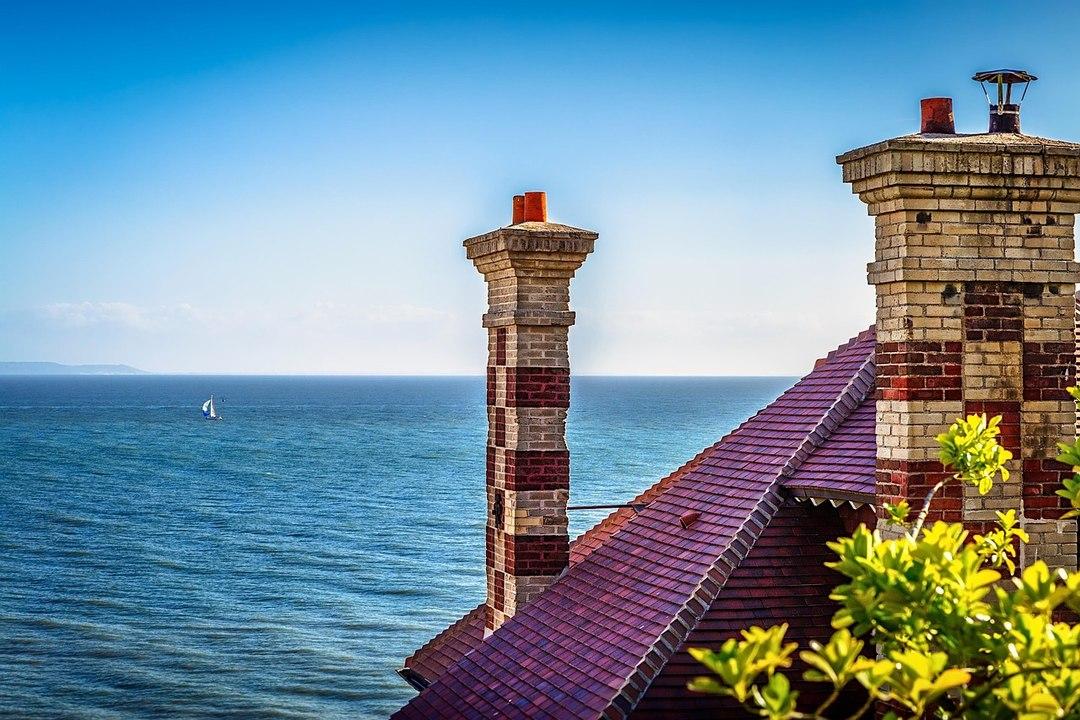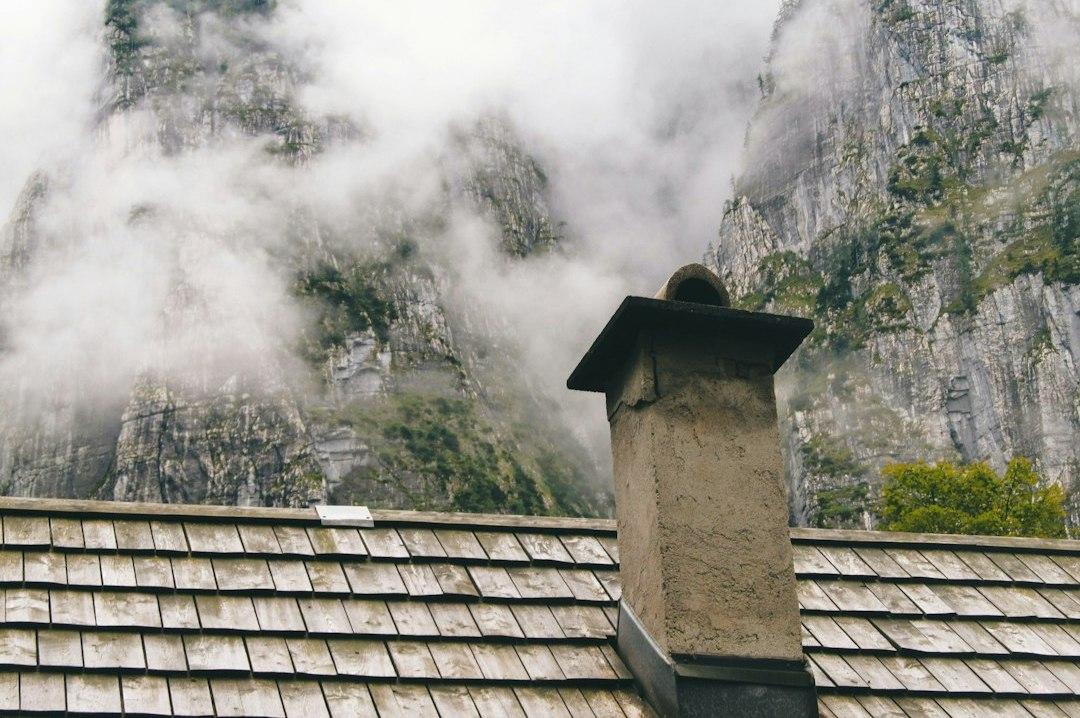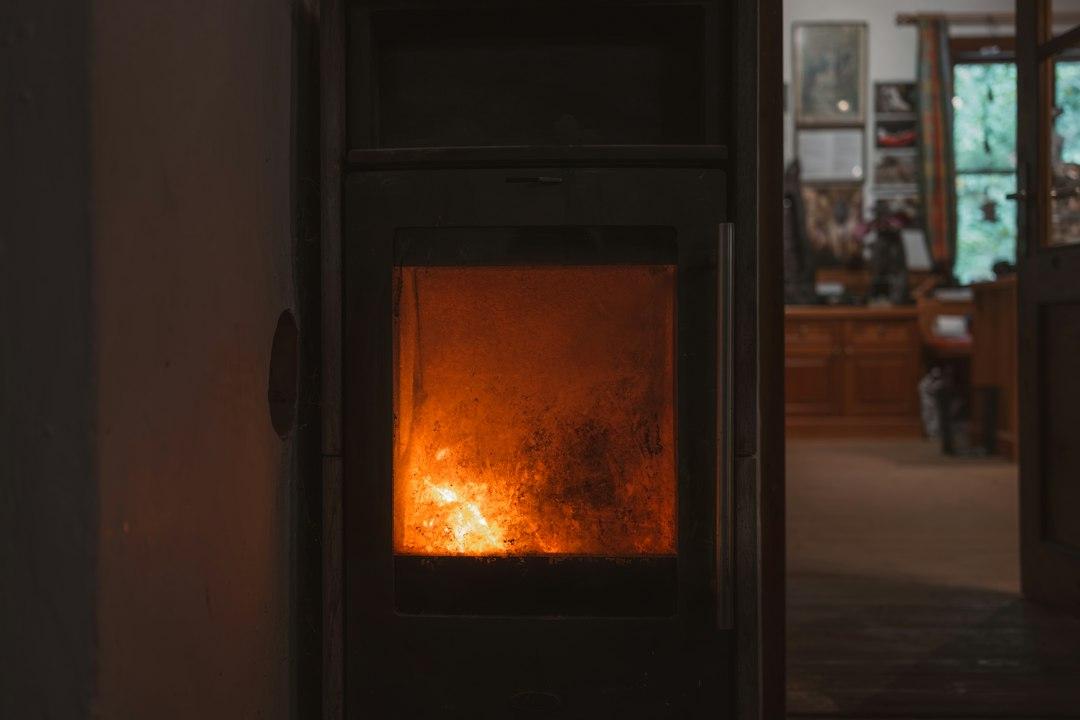
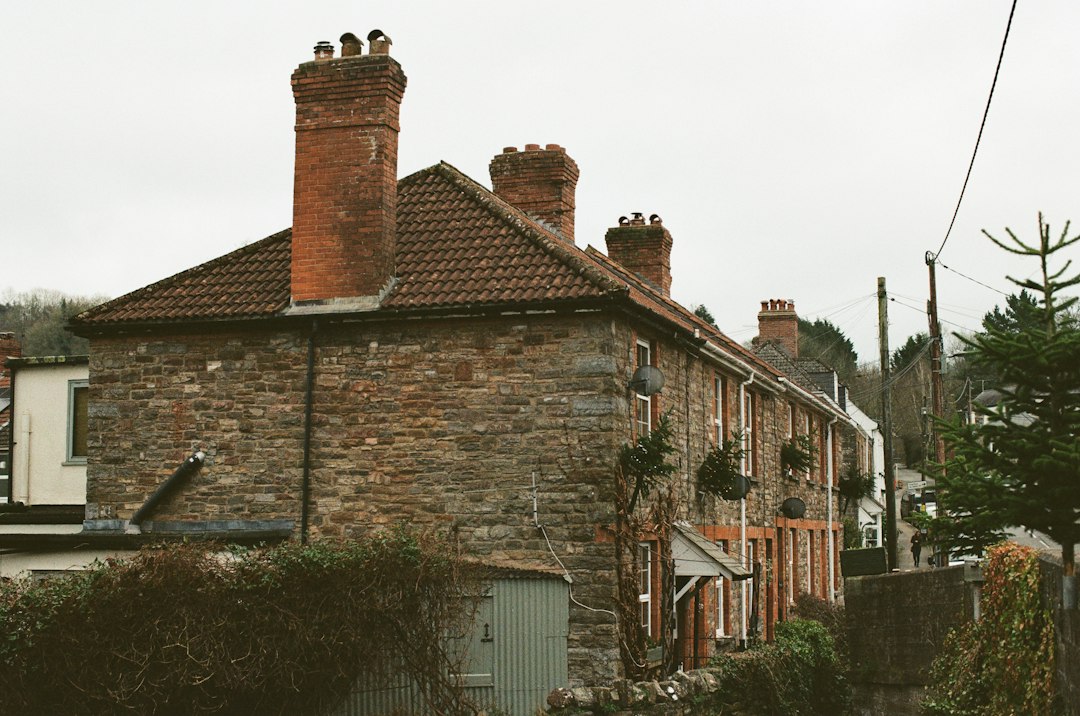
Grey crumbs collecting in the gutter under the chimney. Water standing in the firebox after a storm, with no drips anywhere else in the house. A rusty streak running down the face of the brick from the top. Each of these can lead back to the same place: the slab of cement on top of the chimney that the flue tile pokes through. When that slab cracks, the chimney starts drinking water from above, and almost every Paramount house with a brick chimney has one old enough to be doing it.
Why crowns crack
A lot of older chimneys never had a proper crown. The mason finished the brick, troweled the leftover mortar across the top, sloped it by eye and packed up. Mortar is not made for that job. It is laid thin, it has nothing inside it to hold it together, and it usually sits hard against the flue tile.
That last detail matters most. The tile heats and grows every time the fireplace is lit; the slab around it does not. With nothing to give between them, the crown cracks around the tile first, then outward to the edges. Sun, rain and the odd quake do the rest. Rain that finds those cracks travels down through the masonry, rusts the damper, stains the firebox and softens the mortar under the crown.
Option one: seal it
When the cracks are fine, the slab is still stuck firmly to the brick and its slope still throws water off, sealing is enough. We clean the top down to sound cement, press a crack filler into each line and then brush a rubbery masonry membrane over the whole slab, which stretches when the slab moves instead of splitting.
Sealing buys years rather than decades. It is the right spend when the crown underneath is basically sound.
What sealing cannot do is fix a slab that is loose, too thin or shaped wrong. A membrane over a crown that rocks when you push it just hides the movement until the next quake or the next hot summer opens it again. We will not sell a coating on a crown that needs replacing, because the water keeps coming and you end up paying for the crown anyway.
Option two: pour a new one
When the crown is broken through, loose, crumbling at the edges or so flat that puddles sit on it, sealing only traps the problem. Then we break the old slab away and build forms for a new one: thicker, reinforced, sloped to shed water, and wide enough to overhang the brick so drips fall past the face below. A soft, flexible bead goes between the new slab and the tile, so heat in the flue never pushes against the cement.
A new crown takes more time than a coat of sealer. The old slab has to come off without dropping chunks down the flue, the forms go up, the mix is placed and shaped, and it needs to cure before a cap goes on top. In return you get a top that should outlast the sealer many times over, and one that is built for the job instead of left over from the brick work.
How we decide between them
We inspect the crown by hand, tap for hollow spots, and check whether water has already reached the inside. A Level 2 inspection, $405, shows the flue from the top down and tells us whether rain coming through the crown has already cracked tile or rusted the damper. If it has, the crown is only part of the repair, and we would rather say so before you pay than after.
What tips us toward a new crown:
- Cracks you can fit a fingernail into, or cracks running right across
- Pieces lifting or already missing
- A slab that sits flat or holds water
- Cement crumbling at the edges
- Rust or water marks already in the firebox
What it costs
Crown work has no list price with us, because a small crown around a single flue and a large one spanning two or three flues are very different jobs. We look first and give you a written figure. The jobs often done alongside it do have set prices:
- A cap over the flue, which keeps rain off the middle of the new crown: quoted after we measure
- Finding and stopping a leak, if water is also coming in somewhere else: $580 to $3,450
- A camera inspection to check the flue under the crown: $405
If you are seeing crumbs, stains or water in the firebox, ask for a written crown quote. Tell us what you have noticed and roughly when it began, and we will set up a visit to the roof.
What waiting costs
A cracked crown is cheap next to what it causes. Water getting into the top of the chimney soaks the brick from the inside, and over a few winters that brick starts to shed its face and its mortar. Now the job is a crown plus repointing. Leave it longer and the top rows of brick come loose, and the job becomes a rebuild of the top of the chimney with a new crown on it. Our post on repair versus rebuild follows that slide from one level to the next.
Inside, the same water rusts the damper and marks the firebox, and in a lined chimney it can damage the flue itself.
Related work
Crown repairs often go together with waterproofing for the brick below, a cap, or flashing work. We tell you which of these your chimney needs and which it does not. The crown repair page lists what the job covers.
Booking
If the top of your chimney in Paramount or a nearby city is cracking or letting water in, use our contact page and we will come up and see for ourselves.
Same Fault on Your Chimney?
Neville Chimney Contractors repairs chimneys and fireplaces out of Paramount. We find the part that failed, price the fix on paper and test it once the work is done.